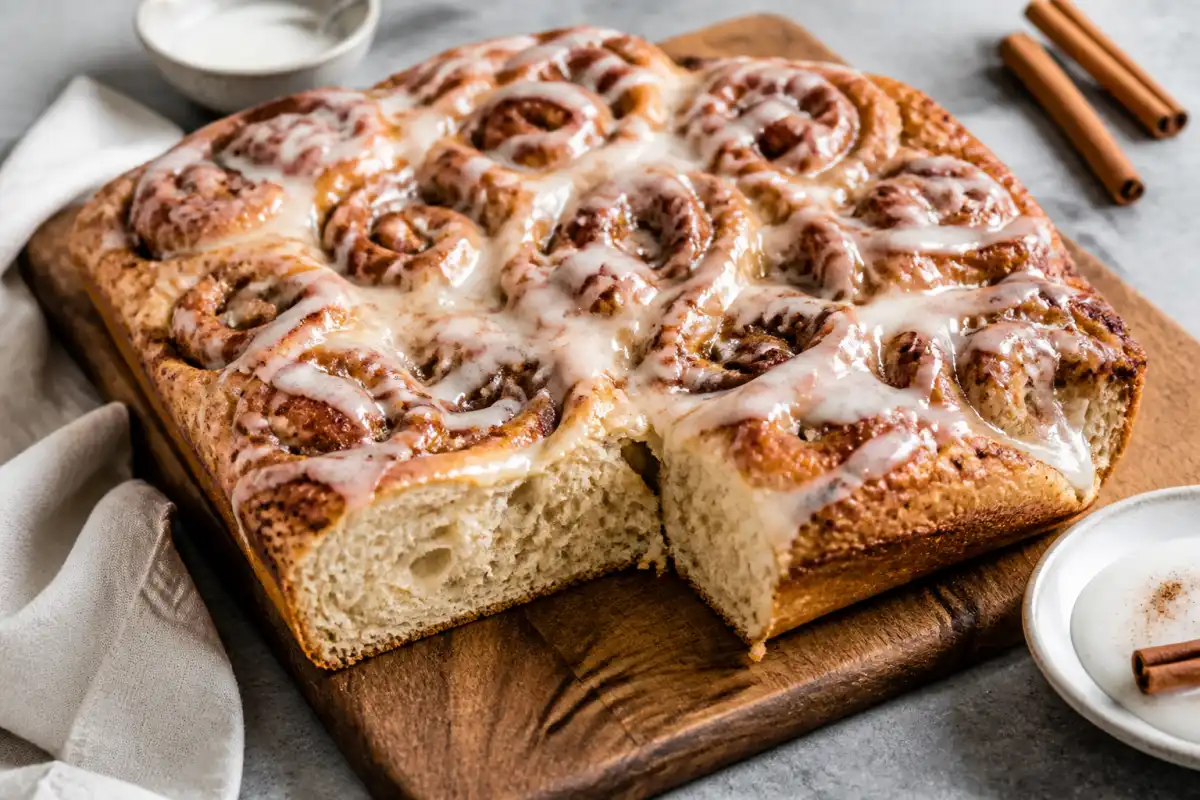
This cinnamon roll focaccia sourdough is a happy meeting between two favorites: the tender chew of focaccia and the cozy swirl of a cinnamon roll. It’s simple to make, easy to share, and feels special without being fussy. The dough stays soft and airy, while a cinnamon-sugar filling brings warmth in every bite.
A light glaze on top finishes it off with the right touch of sweetness. If you love sourdough bakes with a twist, this one will quickly become a weekend ritual.
What Makes This Special
This recipe takes classic focaccia dough and turns it into a sweet brunch star. The olive oil–rich crumb keeps it moist for days, and the sourdough starter adds gentle tang to balance the sweetness.
Instead of individual rolls, you get one big, shareable sheet with swirls and pockets of cinnamon. It’s quicker than traditional cinnamon rolls because there’s no shaping or slicing. Plus, the dimpled top holds the glaze beautifully.
What You’ll Need
- Active sourdough starter (100% hydration): 100 g
- Warm water: 350 g
- Bread flour: 450 g
- All-purpose flour: 100 g
- Fine sea salt: 10 g
- Extra-virgin olive oil: 50 g, plus more for the pan and drizzling
- Cinnamon-sugar filling: 90 g brown sugar + 2 tsp ground cinnamon + 45 g softened butter
- Simple glaze: 120 g powdered sugar + 2–3 tbsp milk (or cream) + 1/2 tsp vanilla
- Optional: pinch of cardamom or nutmeg, orange zest, flaky salt
How to Make It
- Mix the dough: In a large bowl, whisk the starter and warm water until milky.
Add both flours and stir until no dry spots remain. Cover and rest 30 minutes (autolyse).
- Add salt and oil: Sprinkle in the salt and drizzle in the olive oil. Pinch and fold the dough until the oil is absorbed and the dough feels smoother.
It will be sticky—this is good.
- Bulk ferment: Cover and let rise at warm room temp (75–78°F/24–26°C) for 3–4 hours. During the first 90 minutes, perform 3 sets of stretch-and-folds every 30 minutes. The dough should puff by 50–75%.
- Pan and overnight rest: Generously oil a 9×13-inch pan or quarter sheet pan.
Gently transfer the dough, fold it onto itself once or twice, and turn it seam side down. Drizzle with more oil, cover tightly, and refrigerate 8–16 hours.
- Make the filling: Mix brown sugar, cinnamon, and softened butter into a spreadable paste. If using cardamom or zest, stir it in now.
- Warm and dimple: Bring the dough to room temp for 45–60 minutes.
With oiled fingers, press from the center out to stretch the dough to the corners. Dimple the surface with your fingertips.
- Add the cinnamon swirl: Dollop the cinnamon-butter mixture in teaspoons across the top. Use a small offset spatula to gently drag and swirl it across the surface, leaving some dough peeking through. Don’t overwork—you want ribbons, not full coverage.
- Final proof: Let the topped dough rest 30–45 minutes until slightly puffy.
Preheat the oven to 425°F (220°C) with a rack in the center.
- Bake: Drizzle 1–2 tablespoons olive oil over the top. Bake 18–24 minutes, until golden at the edges and set in the middle. If browning too fast, tent loosely with foil for the last few minutes.
- Glaze: Whisk powdered sugar, milk, and vanilla until smooth and pourable.
Cool focaccia for 10–15 minutes, then drizzle. Finish with a light pinch of flaky salt if you like.
Keeping It Fresh
Let it cool completely before storing. Keep at room temperature in an airtight container for 1–2 days.
For longer storage, wrap tightly and freeze slices for up to 2 months. Rewarm in a 300°F (150°C) oven for 8–10 minutes to revive the texture and bloom the cinnamon aroma.
Benefits of This Recipe
- Low-effort shaping: No rolling or cutting—just stretch, swirl, and bake.
- Balanced sweetness: The sourdough tang keeps it from being cloying.
- Great for sharing: A slab bake is easy to slice for brunch or potlucks.
- Make-ahead friendly: The cold ferment fits your schedule and boosts flavor.
- Moist crumb: Olive oil keeps the focaccia plush and tender.
Pitfalls to Watch Out For
- Underproofing: If the dough hasn’t puffed, the crumb will be tight. Look for visible bubbles and a gentle jiggle.
- Over-swirling: Fully mixing the filling into the dough can create greasy spots.
Aim for streaks, not a uniform layer.
- Too little oil: Skimping leads to sticking and dry edges. Oil the pan generously.
- Overbaking: Pull it when the center is set and edges are golden. Dry focaccia loses its charm fast.
Variations You Can Try
- Apple swirl: Fold in finely diced sautéed apples with the cinnamon sugar.
- Maple glaze: Swap milk for maple syrup and reduce powdered sugar slightly.
- Cream cheese drizzle: Beat softened cream cheese with powdered sugar and a splash of milk for a tangy topping.
- Pecan crunch: Sprinkle chopped toasted pecans over the filling before baking.
- Orange cardamom: Add orange zest and a pinch of cardamom to the filling and glaze.
FAQ
Can I use instant yeast instead of sourdough starter?
Yes.
Replace the starter with 1.5 teaspoons instant yeast, add 50 g more water, and increase flour by 25–50 g as needed. Skip the long cold ferment and proof until puffy before baking.
Do I have to refrigerate the dough overnight?
No, but it improves flavor and handling. If you’re short on time, let the dough rise at room temperature until well puffed, then proceed.
Expect a milder flavor and slightly less open crumb.
What if my starter is weak?
Give it 1–2 strong feeds before baking, and extend bulk fermentation until the dough clearly rises. Temperature matters—keep it warm and be patient with the signs of readiness.
How do I keep the glaze from soaking in?
Let the focaccia cool 10–15 minutes first. A slightly warm surface sets the glaze without melting it fully.
For a thicker finish, make the glaze stiffer and apply after the bread cools completely.
Can I bake this in a cast iron skillet?
Absolutely. Use a well-oiled 12-inch skillet. The edges will brown deeply and crisp a bit more, which contrasts nicely with the soft interior.
Final Thoughts
This cinnamon roll focaccia sourdough gives you a cozy, bakery-style treat with minimal fuss.
It’s flexible, forgiving, and perfect for sharing—coffee optional but encouraged. Once you try the swirl-and-dimple method, you’ll come back to it whenever you want something special without the extra work.
Leave a Reply