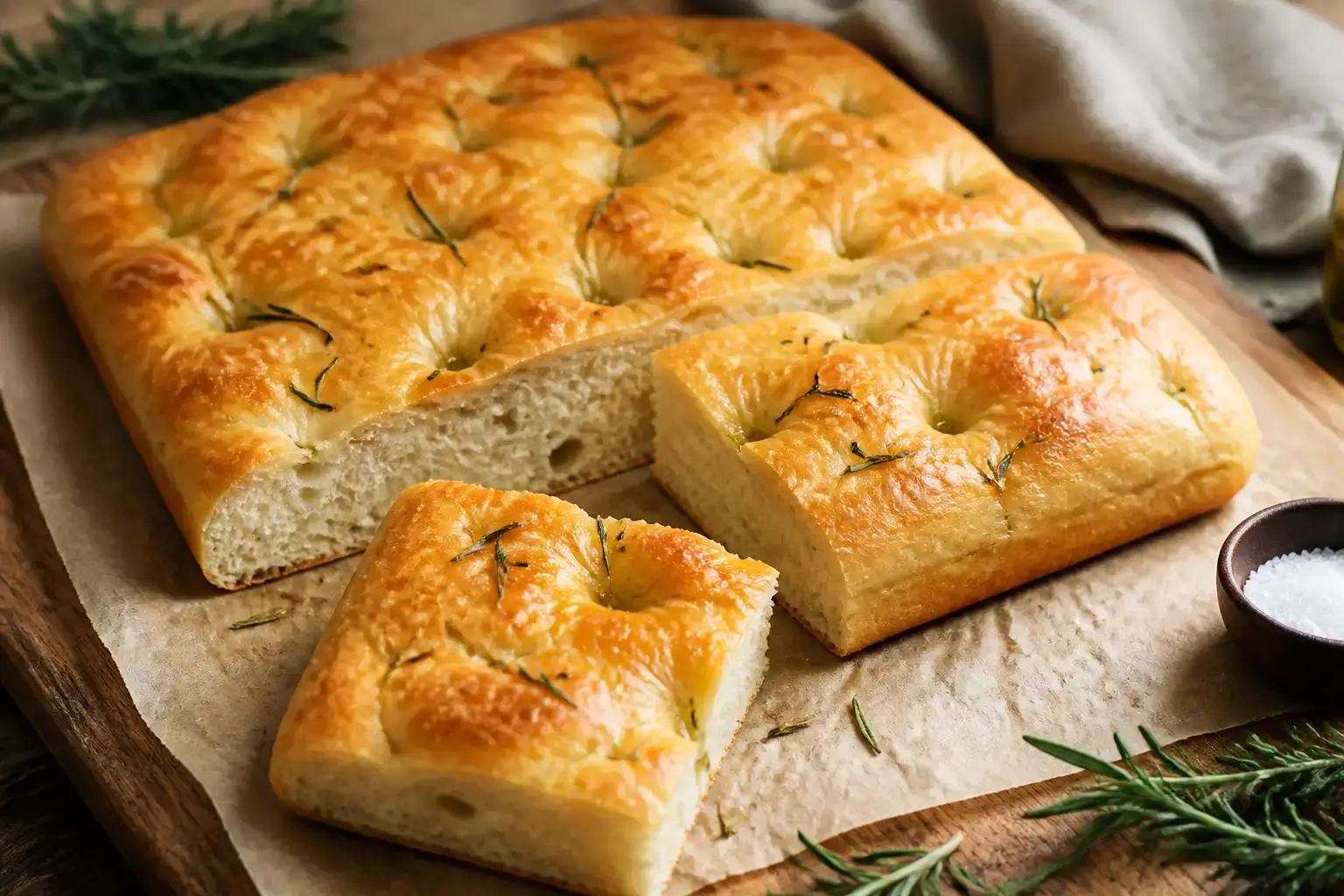
If you’re craving fresh, bakery-style focaccia but don’t want to wait overnight, this same day version has your back. It’s light, chewy, and packed with olive oil and herb flavor. You’ll get those classic dimples, a crisp golden crust, and a tender interior without a long ferment.
Perfect for dunking in soup, building sandwiches, or just tearing and snacking. If you can set aside a few hours this afternoon, you can have warm focaccia on the table by dinner.
What Makes This Recipe So Good

- Fast but flavorful: A few simple tricks—warm water, a touch more yeast, and a good olive oil soak—give you great flavor the same day.
- Foolproof texture: High hydration yields that signature airy crumb and bubbly top.
- Hands-off rising: Most of the time is inactive proofing, so you can go about your day.
- Endlessly customizable: Add tomatoes, olives, onions, or keep it classic with rosemary and sea salt.
- Works with basic equipment: No stand mixer required—just a bowl, a sheet pan, and your fingers.
What You’ll Need
- 4 cups (500 g) bread flour (all-purpose works, but bread flour gives better chew)
- 1 3/4 cups (420 ml) warm water (about 100–105°F / 38–41°C)
- 2 1/4 tsp (7 g) instant or rapid-rise yeast
- 2 tsp (10 g) fine sea salt
- 2 tbsp (25 g) sugar or honey (helps speed fermentation and browning)
- 6 tbsp (90 ml) extra-virgin olive oil, divided
- Flaky sea salt, for finishing
- Fresh herbs like rosemary or thyme (optional)
- Toppings (optional): sliced cherry tomatoes, thin red onion, olives, garlic, or parmesan
Step-by-Step Instructions

- Mix the dough: In a large bowl, whisk warm water, yeast, and sugar. Add flour and fine sea salt.
Stir with a spatula until shaggy and no dry patches remain. The dough will be sticky—this is good.
- First rest (15 minutes): Cover the bowl and let it sit for 15 minutes. This brief rest hydrates the flour and makes mixing easier.
- Fold for strength: Drizzle in 2 tbsp olive oil.
With wet hands, perform 3–4 sets of stretch-and-folds around the dough, turning the bowl as you go. You’re building gluten without kneading.
- First rise (45–60 minutes): Cover and let rise in a warm spot until noticeably puffy, about 1 hour. If your kitchen is cool, give it up to 75 minutes.
- Prepare the pan: Generously oil a 9×13-inch sheet pan or similarly sized metal pan with 2 tbsp olive oil.
You want an even oil coat for that crisp bottom.
- Transfer and stretch: Gently scrape the dough into the pan. Oil your fingertips and press it outward. If it springs back, let it rest 10 minutes, then finish stretching to the edges.
- Second rise (30–45 minutes): Cover loosely and let it rise again until puffy and slightly jiggly when you shake the pan.
- Dimple and top: Heat oven to 450°F (232°C).
Oil your hands and press your fingertips straight down into the dough to create deep dimples. Drizzle 1–2 tbsp olive oil over the top, add flaky salt, herbs, and any toppings.
- Bake: Place on the center rack and bake 20–25 minutes, until deep golden with crisp edges. For an extra-crisp bottom, bake the last 2–3 minutes on the lowest rack.
- Finish and cool: Brush or drizzle the remaining olive oil over the hot focaccia.
Cool in the pan 10 minutes, then transfer to a rack. Slice or tear and serve warm.
How to Store
- Room temperature: Wrap loosely in foil or store in a paper bag for up to 2 days. Re-crisp in a 375°F (190°C) oven for 8–10 minutes.
- Freezer: Cool completely, slice, wrap well, and freeze up to 2 months.
Reheat from frozen at 375°F (190°C) for 12–15 minutes.
- Avoid the fridge: Refrigeration dries out bread and dulls flavor.
Benefits of This Recipe
- Same-day payoff: Enjoy bakery-quality bread without waiting overnight.
- Great texture: High hydration and olive oil give a tender crumb and crisp crust.
- Budget-friendly: Pantry staples become an impressive side or main.
- Meal-friendly: Works for appetizers, sandwiches, or as a base for flatbread-style pizzas.
Pitfalls to Watch Out For
- Water too hot: Anything above 115°F (46°C) can kill yeast. Aim for warm bath temperature.
- Under-proofing: If it isn’t puffy before baking, you’ll get a dense crumb. Give it time.
- Too little oil: Skimping reduces crispness and flavor.
Oil the pan well and finish on top.
- Overloading toppings: Heavy toppings can weigh down the rise. Keep them light and evenly spaced.
- Cutting too soon: Let it rest at least 10 minutes so the crumb sets.
Variations You Can Try
- Tomato-Rosemary: Halved cherry tomatoes, rosemary, and flaky salt.
- Olive and Lemon: Sliced kalamatas with thin lemon zest strips and thyme.
- Caramelized Onion: Sweet onions, black pepper, and a dusting of parmesan.
- Garlic-Herb Butter: Melted butter with grated garlic and parsley brushed on after baking.
- Spicy Chili: Calabrian chili paste or red pepper flakes with oregano.
FAQ
Can I use active dry yeast instead of instant?
Yes. Bloom 2 1/4 tsp active dry yeast in the warm water with the sugar for 5–10 minutes until foamy, then proceed.
Do I need a stand mixer?
No.
This is a no-knead style dough. A spatula and a few sets of folds are enough to build structure.
Why is my dough so sticky?
High hydration creates a light, airy crumb. Keep your hands oiled or wet and resist adding extra flour unless it’s truly unmanageable.
Can I bake this in a cast-iron skillet?
Absolutely.
Oil the skillet well and follow the same rise and bake times. The crust will be extra crisp.
How do I know it’s done?
Look for a deep golden top and browned edges. The bottom should be crisp and sound hollow when tapped.
Wrapping Up
Same day focaccia bread brings bakery results to your kitchen tonight with minimal fuss.
With a few pantry staples, plenty of olive oil, and some patient rises, you’ll get a golden, airy loaf that’s perfect for any meal. Keep the toppings simple, don’t rush the proof, and enjoy that first warm, salty bite. Once you try it, this will become your go-to weeknight bread.
Ingredients
Method
- Mix the dough: In a large bowl, whisk warm water, yeast, and sugar. Add flour and fine sea salt. Stir with a spatula until shaggy and no dry patches remain. The dough will be sticky—this is good.
- First rest (15 minutes): Cover the bowl and let it sit for 15 minutes. This brief rest hydrates the flour and makes mixing easier.
- Fold for strength: Drizzle in 2 tbsp olive oil. With wet hands, perform 3–4 sets of stretch-and-folds around the dough, turning the bowl as you go. You’re building gluten without kneading.
- First rise (45–60 minutes): Cover and let rise in a warm spot until noticeably puffy, about 1 hour. If your kitchen is cool, give it up to 75 minutes.
- Prepare the pan: Generously oil a 9×13-inch sheet pan or similarly sized metal pan with 2 tbsp olive oil. You want an even oil coat for that crisp bottom.
- Transfer and stretch: Gently scrape the dough into the pan. Oil your fingertips and press it outward. If it springs back, let it rest 10 minutes, then finish stretching to the edges.
- Second rise (30–45 minutes): Cover loosely and let it rise again until puffy and slightly jiggly when you shake the pan.
- Dimple and top: Heat oven to 450°F (232°C). Oil your hands and press your fingertips straight down into the dough to create deep dimples. Drizzle 1–2 tbsp olive oil over the top, add flaky salt, herbs, and any toppings.
- Bake: Place on the center rack and bake 20–25 minutes, until deep golden with crisp edges. For an extra-crisp bottom, bake the last 2–3 minutes on the lowest rack.
- Finish and cool: Brush or drizzle the remaining olive oil over the hot focaccia. Cool in the pan 10 minutes, then transfer to a rack. Slice or tear and serve warm.
Printable Recipe Card
Want just the essential recipe details without scrolling through the article? Get our printable recipe card with just the ingredients and instructions.
Leave a Reply