Focaccia is one of those breads that looks impressive but is surprisingly easy to make at home. With a golden, crisp crust and a soft, airy center, it’s the kind of bread that makes any meal feel special. You don’t need special equipment or advanced baking skills—just a bowl, a pan, and a little patience.
This version is forgiving, flavorful, and flexible, so you can top it with your favorite herbs, onions, or olives. Once you make it, you’ll want it on repeat for weeknights and gatherings alike.
Why This Recipe Works
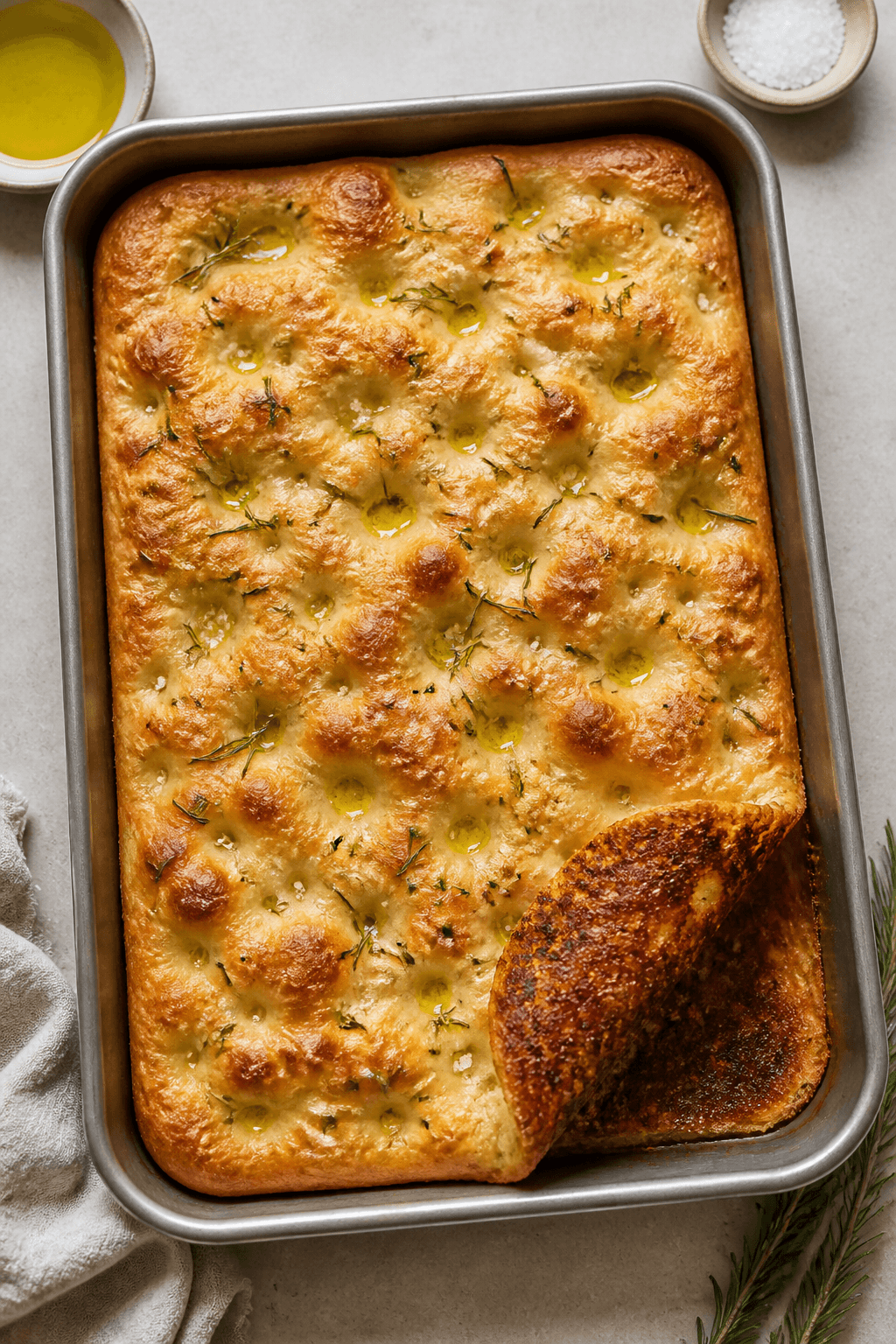
- High hydration dough: A wetter dough creates that signature open, airy crumb and chewy texture.
- Olive oil at every step: Oil in the dough and pan gives focaccia its rich flavor and crisp, golden bottom.
- Overnight (or quick) rise option: A long, cold proof builds flavor, but a same-day rise still delivers great results.
- Generous dimpling: Pressing deep dimples helps the dough rise evenly and holds oil and toppings.
- Simple ingredients: Just flour, water, yeast, salt, and oil—no fancy techniques needed.
What You’ll Need
- 4 cups (500 g) bread flour (all-purpose works too, but bread flour gives more chew)
- 2 teaspoons kosher salt
- 2 teaspoons sugar or honey (helps activate the yeast and browning)
- 2 1/4 teaspoons instant or active dry yeast (one standard packet)
- 1 3/4 cups (415 ml) warm water (about 105–110°F/40–43°C)
- 1/4 cup (60 ml) extra-virgin olive oil for the dough, plus more for the pan and topping
- Flaky sea salt for finishing
- Optional toppings: fresh rosemary, thinly sliced red onion, cherry tomatoes, olives, garlic, or shredded cheese
Step-by-Step Instructions
- Mix the dough: In a large bowl, whisk flour, salt, and sugar. Add yeast, warm water, and 2 tablespoons of olive oil.Stir with a spoon until no dry spots remain. The dough will be sticky—this is good.
- First rise: Cover the bowl with plastic wrap or a damp towel. Let it rise at room temperature until doubled, about 60–90 minutes.For deeper flavor, refrigerate overnight (up to 24 hours), then let it warm up for 45 minutes before shaping.
- Prep the pan: Generously oil a 9×13-inch pan or a large sheet pan (about 2–3 tablespoons). Tilt to coat the bottom and sides.
- Transfer and fold: Scrape the dough into the pan. Drizzle 1 tablespoon olive oil on top.With oiled hands, gently stretch the dough toward the corners. If it springs back, let it rest 10 minutes, then stretch again.
- Second rise: Cover loosely and let the dough puff until about 50% larger, 30–45 minutes. It should look bubbly and lively.
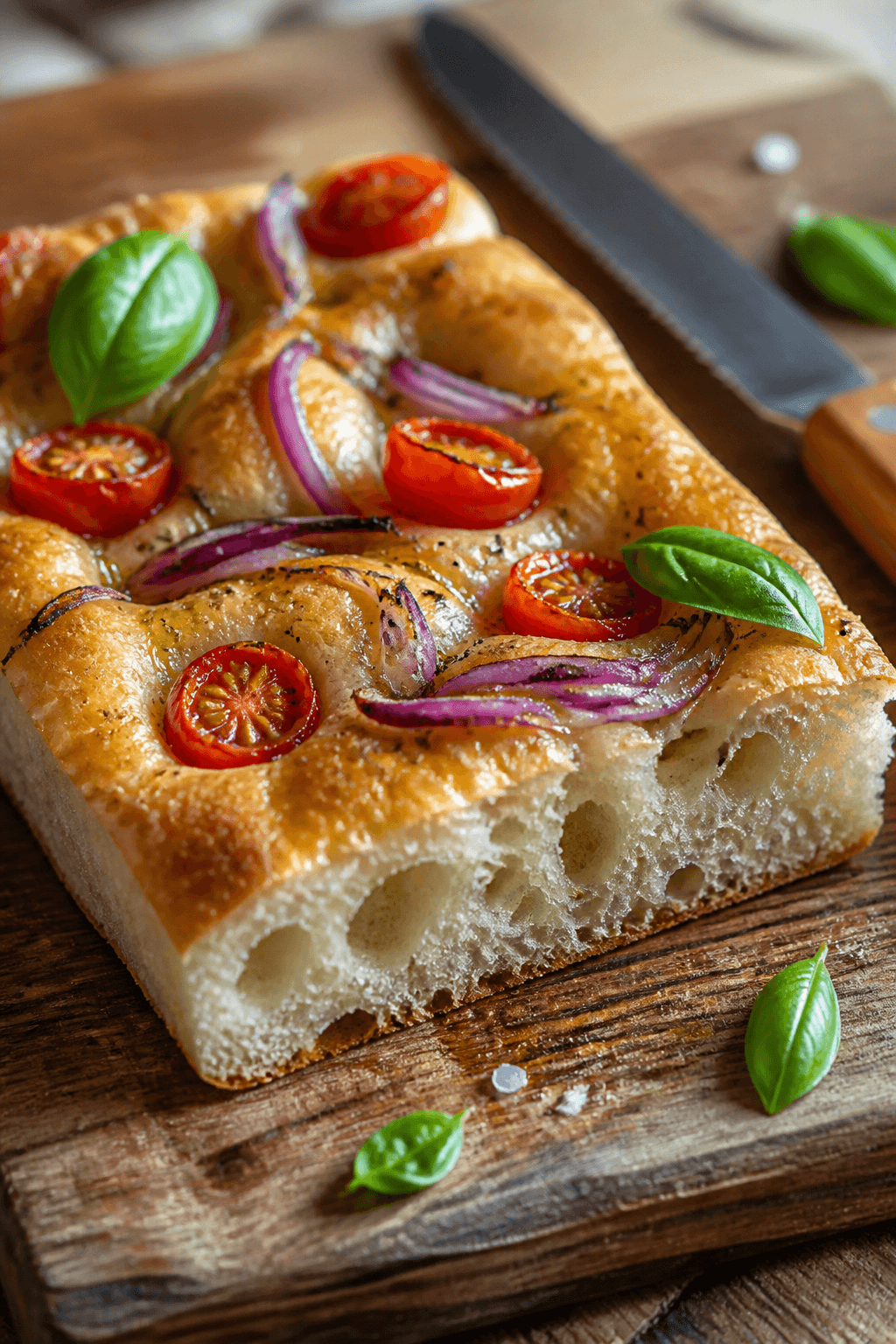
- Dimple and top: Heat oven to 450°F (230°C).Oil your fingertips and press straight down into the dough to make deep dimples all over. Drizzle 1–2 tablespoons olive oil on top. Sprinkle flaky salt and add toppings like rosemary, onions, or tomatoes.
- Bake: Bake 20–25 minutes until the top is golden and the edges are crisp.If using a dark pan, start checking at 18 minutes.
- Finish and cool: Brush or drizzle a little more olive oil over the hot bread for shine and flavor. Cool in the pan 5–10 minutes, then transfer to a rack. Slice and serve warm or at room temperature.
Keeping It Fresh
- Room temperature: Wrap loosely in foil or store in a paper bag for up to 2 days.Avoid airtight containers—they soften the crust.
- Reheat: Warm slices in a 350°F (175°C) oven for 8–10 minutes to revive the crisp edges.
- Freeze: Wrap tightly in plastic, then foil. Freeze up to 2 months. Reheat from frozen at 350°F (175°C) for 15–20 minutes.
Why This is Good for You
- Olive oil benefits: Extra-virgin olive oil provides heart-healthy fats and a satisfying richness.
- Customizable toppings: Add tomatoes, onions, herbs, or olives for extra fiber, antioxidants, and flavor.
- Portion-friendly: It’s easy to cut into small squares for controlled servings without feeling deprived.
Common Mistakes to Avoid
- Using too little oil: Skimping on oil leads to a pale crust and sticky bottom.Be generous in the pan and on top.
- Rushing the rise: Under-proofed dough won’t bubble or brown well. Wait for visible puffiness and bubbles.
- Shallow dimpling: Light pokes don’t do much. Press firmly to create deep wells that hold oil and toppings.
- Overloading toppings: Too many wet toppings can make soggy bread.Pat juicy items dry and don’t pile them on.
- Cutting too soon: Let it rest a few minutes so the crumb sets and stays airy.
Variations You Can Try
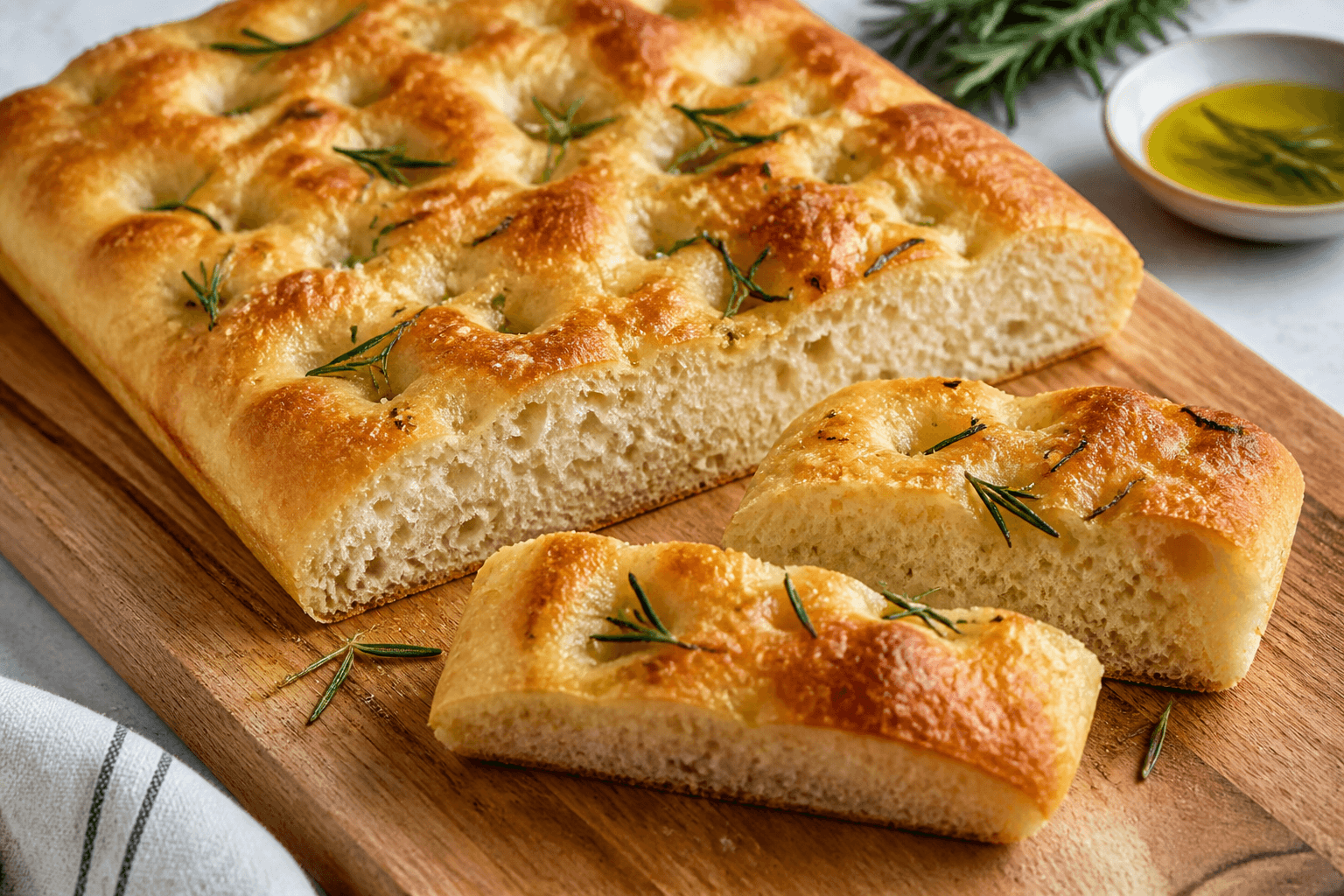
- Classic rosemary and sea salt: Keep it simple with fresh rosemary needles and flaky salt.
- Tomato and basil:</-strong> Halved cherry tomatoes pressed into the dough, finished with fresh basil after baking.
- Olive and red onion: Sliced Kalamata olives and thin red onion for a savory bite.
- Garlic and cheese: Thin garlic slices and a light shower of Parmesan during the final 5 minutes of baking.
- Whole wheat twist:</-strong> Swap 25–30% of the flour for whole wheat; add 1–2 tablespoons extra water if needed.
FAQ
Can I use all-purpose flour instead of bread flour?
Yes. All-purpose flour works well and makes a slightly softer crumb. Bread flour adds more chew, but both are delicious.
Do I have to cold-proof the dough overnight?
No.
A same-day rise makes great focaccia. The overnight rest just develops more flavor and a bit more structure.
Why is my dough so sticky?
Focaccia dough is meant to be wet. Oil your hands and the pan, and avoid adding extra flour.
Stickiness leads to better bubbles.
How do I get a super crispy bottom?
Use plenty of oil in the pan, preheat your oven fully, and bake on a lower rack for strong bottom heat. A dark metal pan helps, too.
What size pan should I use?
A 9×13-inch pan gives a thicker, pillowy focaccia. A large sheet pan yields a thinner, crisper version.
Adjust bake time slightly.
Can I make this gluten-free?
Use a high-quality 1:1 gluten-free flour blend designed for yeast breads and add 1 teaspoon xanthan gum if your blend doesn’t include it. Expect a denser crumb but good flavor.
How do I know it’s done?
The top should be deep golden with crisp edges, and the bottom should be well browned. If unsure, bake 2–3 minutes more.
Wrapping Up
Homemade focaccia is simple, rewarding, and endlessly adaptable.
With a well-oiled pan, a patient rise, and bold dimples, you’ll get that bakery-style crust and airy crumb every time. Keep this recipe handy for weeknight dinners, party platters, or a cozy slice with soup. Once you bake it, you’ll understand why it becomes a house favorite.
Ingredients
Method
- Mix the dough: In a large bowl, whisk flour, salt, and sugar. Add yeast, warm water, and 2 tablespoons of olive oil. Stir with a spoon until no dry spots remain. The dough will be sticky—this is good.
- First rise: Cover the bowl with plastic wrap or a damp towel. Let it rise at room temperature until doubled, about 60–90 minutes. For deeper flavor, refrigerate overnight (up to 24 hours), then let it warm up for 45 minutes before shaping.
- Prep the pan: Generously oil a 9×13-inch pan or a large sheet pan (about 2–3 tablespoons). Tilt to coat the bottom and sides.
- Transfer and fold: Scrape the dough into the pan. Drizzle 1 tablespoon olive oil on top. With oiled hands, gently stretch the dough toward the corners. If it springs back, let it rest 10 minutes, then stretch again.
- Second rise: Cover loosely and let the dough puff until about 50% larger, 30–45 minutes. It should look bubbly and lively.
- Dimple and top: Heat oven to 450°F (230°C). Oil your fingertips and press straight down into the dough to make deep dimples all over. Drizzle 1–2 tablespoons olive oil on top. Sprinkle flaky salt and add toppings like rosemary, onions, or tomatoes.
- Bake: Bake 20–25 minutes until the top is golden and the edges are crisp. If using a dark pan, start checking at 18 minutes.
- Finish and cool: Brush or drizzle a little more olive oil over the hot bread for shine and flavor. Cool in the pan 5–10 minutes, then transfer to a rack. Slice and serve warm or at room temperature.
Printable Recipe Card
Want just the essential recipe details without scrolling through the article? Get our printable recipe card with just the ingredients and instructions.
Leave a Reply