Feed your starter. Make sure it’s bubbly and active. It should double within 4–6 hours and pass the float test.
Mix the dough. In a large bowl, combine 100 g active starter, 425 g warm water, and 500 g bread flour. Stir until no dry bits remain.
Rest 20–30 minutes (autolyse).
Add salt and oil. Sprinkle in 10 g fine sea salt and 1 tablespoon olive oil. Pinch and fold the dough until incorporated. The dough will be sticky—that’s good.
Bulk fermentation with folds. Over 2 hours at room temp, perform 3–4 sets of stretch-and-folds every 30 minutes.
Cover and let it rise until puffy and about 50% larger, another 1–2 hours depending on kitchen temperature.
Pan and cold proof. Generously oil a 9x13-inch pan (or a large cast-iron skillet). Gently tip in the dough, fold edges to create a rough rectangle, and coat the surface with more olive oil. Cover and refrigerate 8–12 hours for flavor and easy handling.
Warm up and preheat. Remove from the fridge and let the dough sit at room temp 45–60 minutes.
Preheat oven to 425°F (220°C).
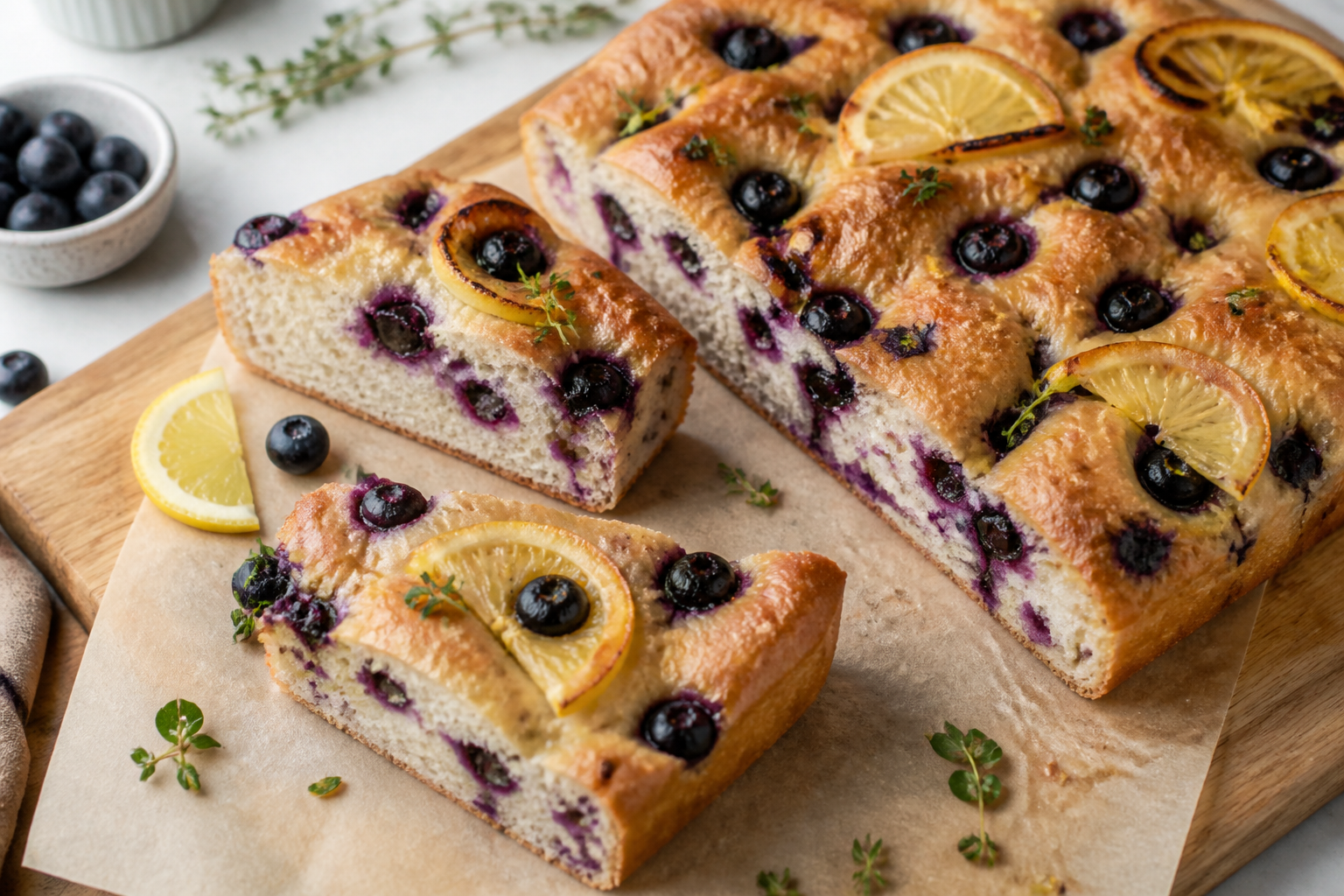
Dimple and top. Oil your fingertips and press deep dimples across the dough. Sprinkle on lemon zest (from 1 lemon) and press in 1 to 1 1/2 cups blueberries. Drizzle with 1–2 tablespoons olive oil and a pinch of flaky salt if using.
Bake. Bake 22–28 minutes, until the edges are deeply golden and the top has caramelized spots.
Rotate the pan once for even color.
Make lemon syrup. While it bakes, simmer 2 tablespoons lemon juice with 2 tablespoons sugar (or honey) for 1–2 minutes until slightly thickened. Add a few drops vanilla if you like.
Finish. Brush warm focaccia with lemon syrup. Cool 10–15 minutes before slicing so the crumb sets and the berries don’t burst out.